Be yourself; Everyone else is already taken.
— Oscar Wilde.
This is the first post on my new blog. I’m just getting this new blog going, so stay tuned for more. Subscribe below to get notified when I post new updates.
Be yourself; Everyone else is already taken.
— Oscar Wilde.
This is the first post on my new blog. I’m just getting this new blog going, so stay tuned for more. Subscribe below to get notified when I post new updates.
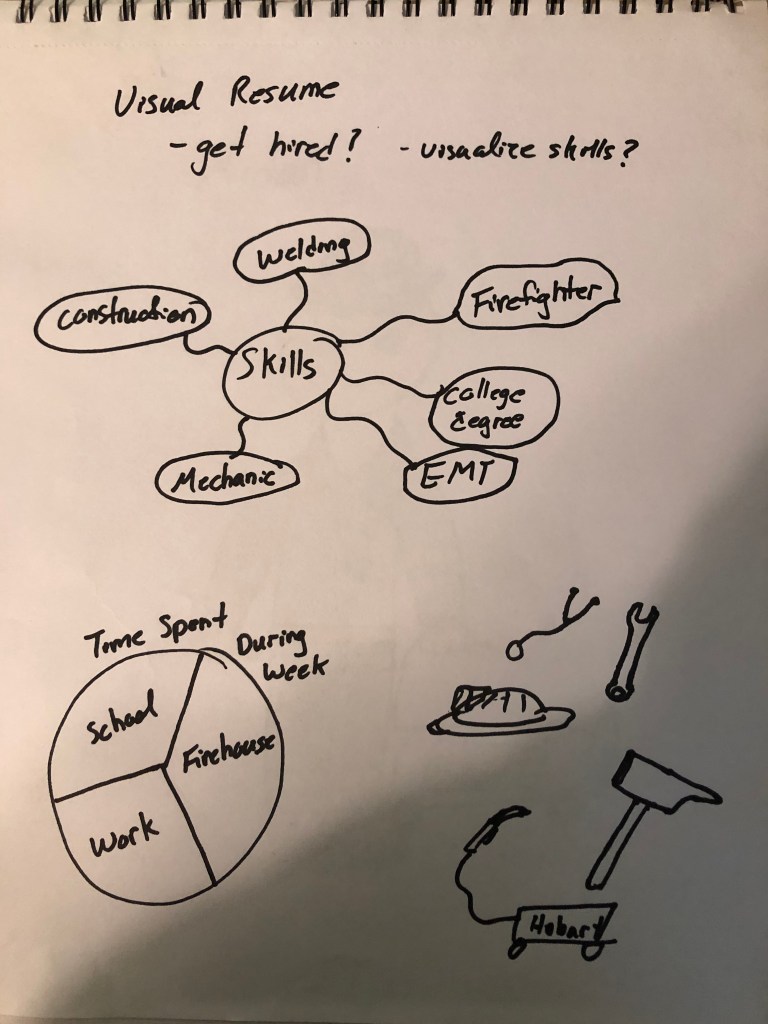
For my visual resume I had a few different areas to choose from. It was tough to pick from the three main areas I spend my time during the week: work, school, and the firehouse. I decided that my main end goal would be to use these areas to find a final career. Each one of these areas requires several different skill sets to pick from as well. I ended up picking elements of each area to put into my personal infographic. This gives a visual aspect of the skills I have. By placing each element, I show myself as a whole.
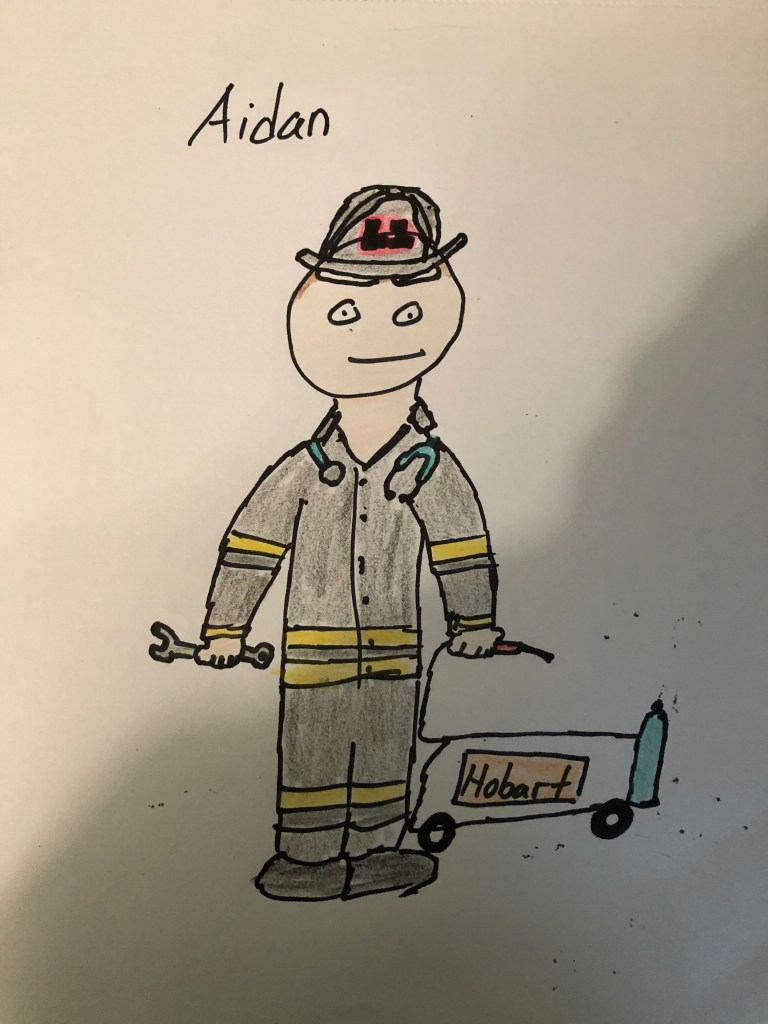
I used my turnout coat and pants to show my firefighting skills. I put a MIG welder next to me to illustrate my welding and steel abilities. I’m holding a box wrench in my hand for my mechanic skills. Lastly there is a stethoscope around my neck to show that I’m an EMT.
Rough Draft
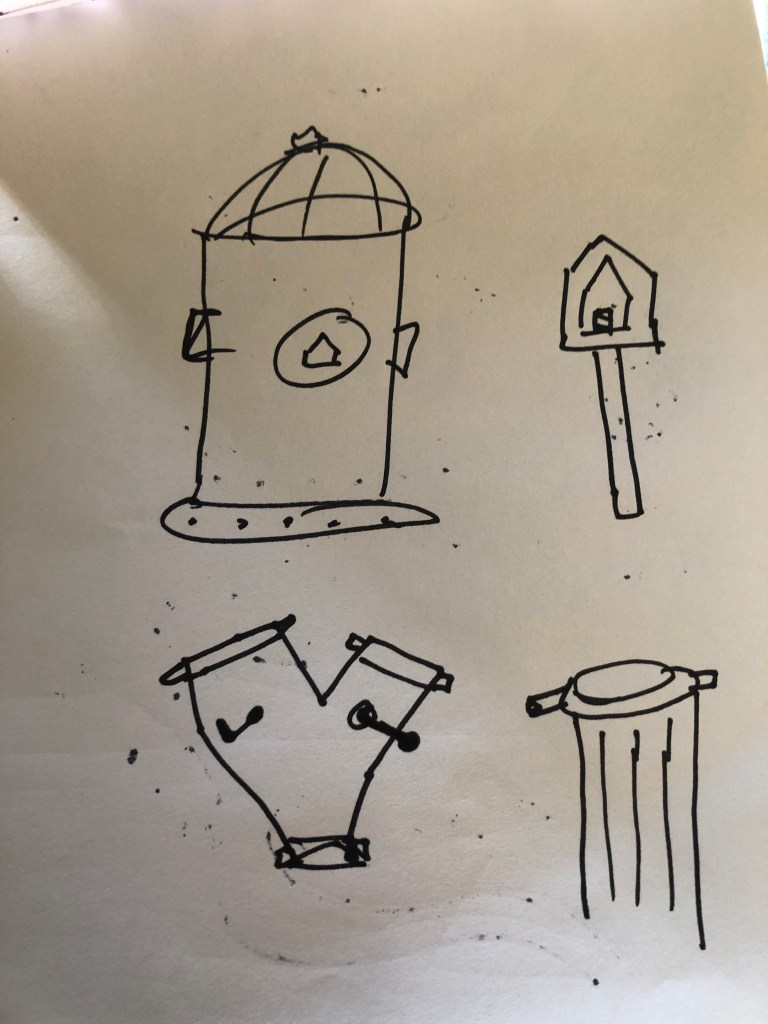
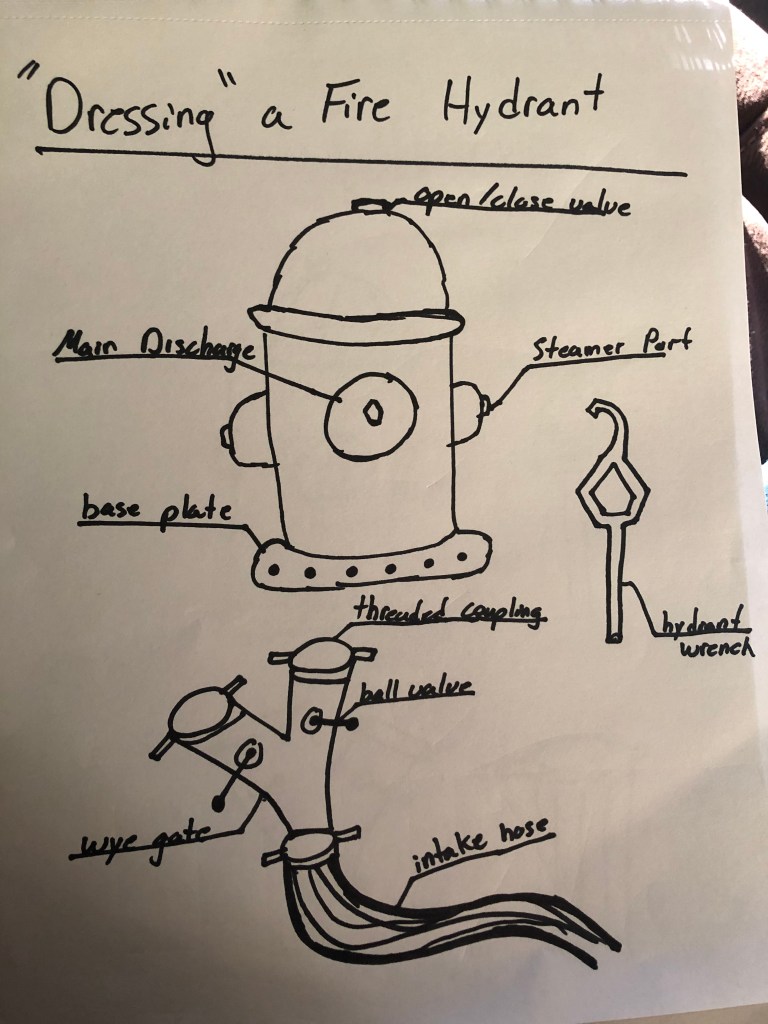
For my explanation graphic I choose a basic skill for firefighters across the country. Typicall referred to as “dressing the hydrant” A slang term, refers to tools and methods used to establish water supplies to Engines. There is a few parts to the physical hydrant. Depending on how much water and pressure is needed you must choose between the front or side ports. The wye gate is placed to run multiple lines off of the same port. A hydrant has a pentagon-shaped lug, that is only operable with a hydrant wrench. I wanted to include all of the basic necessities to flow water. I took inspiration from the engine diagram below. It shows how all of the parts work together to make a final product. It showed several similarities in what I was trying to express.
Inspiration
Final

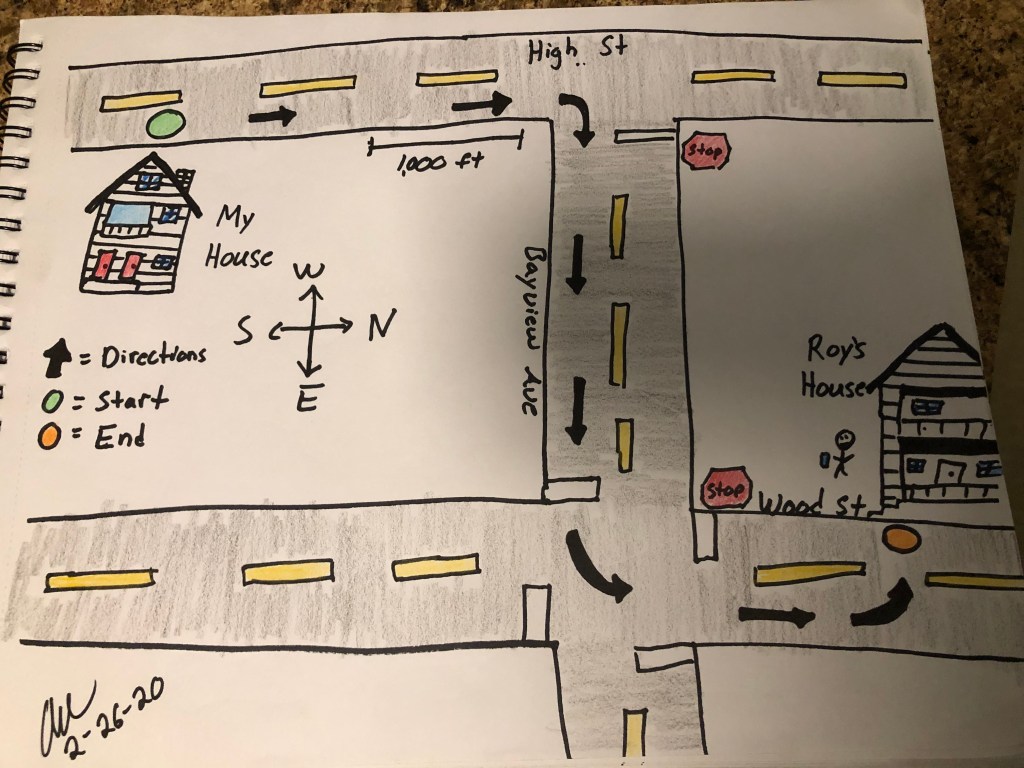
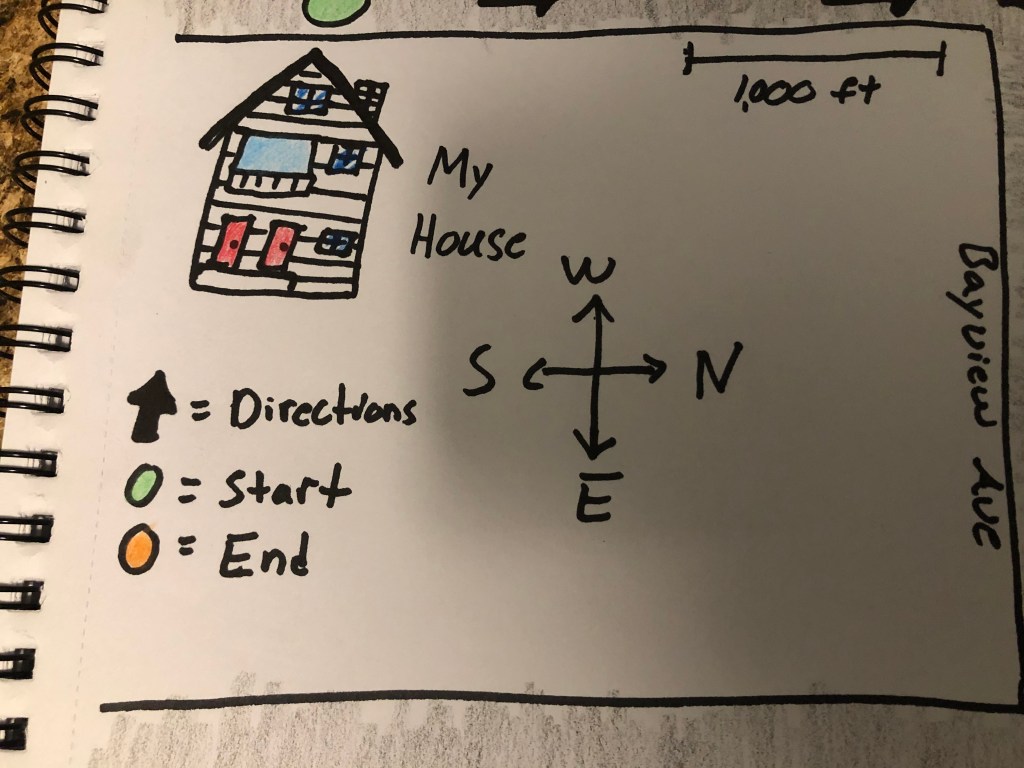
For my map i chose to make it from my house to Roy’s house. It begins on High St in Bristol, were my apartment is. I then illustrated the turns and roads to use to get to Roy’s apartment. I decided on using a green circle for the start indicator, and an orange circle for the destination indicator. I put the compass rose next to the key, and a scale marker near the intersection of High St. and Bayview Ave.
I decided to use Roy’s house as the destination for a few reasons. I’m there often so I know the route by heart. It’s relatively close to my house, and because it is only 2 turns, there isn’t really a need for landmarks because of the simplicity. On top of that there is only one way to get there.
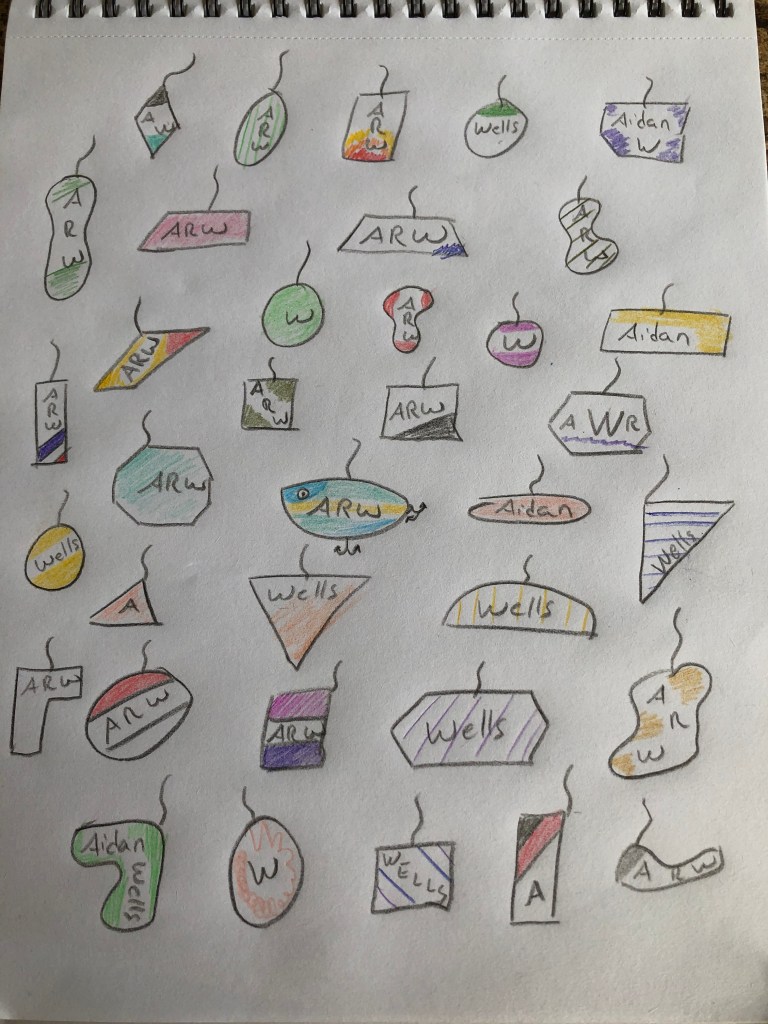
I did’t really have any rhyme or reason when making these luggage tags. Whatever popped into my head went straight to the paper. Some of the shapes were basic and others were just abstract. As far as coloring went i just let my mind wonder. Some i went with lines and other shading. I followed the contours on a few of them and other went against the outline.

This one was my favorite. As i was coloring in the other I noticed that one of them looked like a fishing lure. It was a last minute edition I put hooks on it and an eye. Completely unintended, but worked out fairly well.
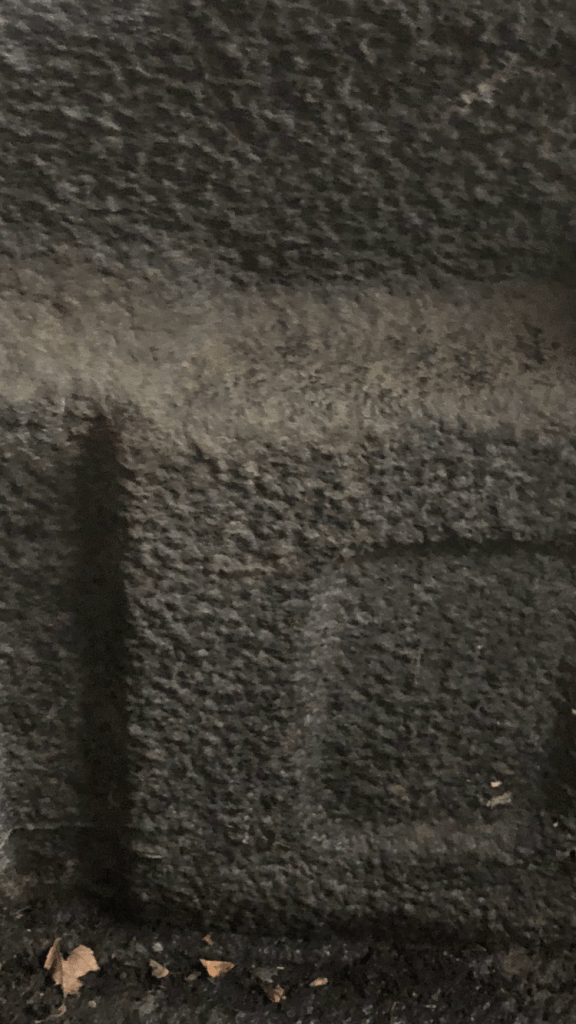
1.) Texture and Color. At a first glance there appears to be just a single color. But when you look a little closer, you can notice many various tones of black, gray, and brown. The rough and abrasive texture draws the eye around to different areas in the photo. This is a close up picture of a truck bed liner. When applied it is all a deep black, but with time, it develops and fades into many colors.

2.) Shape. I found this photo interesting, mainly because there is no perfect shapes. Each individual shapes is abstract and unique. This was broken laminated glass from a car windshield. The lamination held together portions of glass, and therefore hold a pattern. I find it satisfying to look at this picture. Your eyes cannot help but to look at every little shape in the photo.

3.) Line. This picture is full of lines. The grid in the background is uniform in size, shape, and orientation. The vertical and horizontal lines are perfectly spaced into little squares. While this is appealing to look at, you can’t help but to look at the middle line. This is an EKG of sinus bradycardia. A normal heart rhythm with a slow beat. The way the line elevates and depresses is clean and repetitive. The rhythm and movement it follows is visually attractive to us.

4.) Relative Size. The photo is interesting because the object appears to be a massive cylinder. When in reality it’s a piston out of a Cummins diesel motor that is no big than 4 inches in diameter. The close up of the shot makes it appear to be huge. To put in perspective the rings that look to be inches, are actually about 1.5 millimeters.
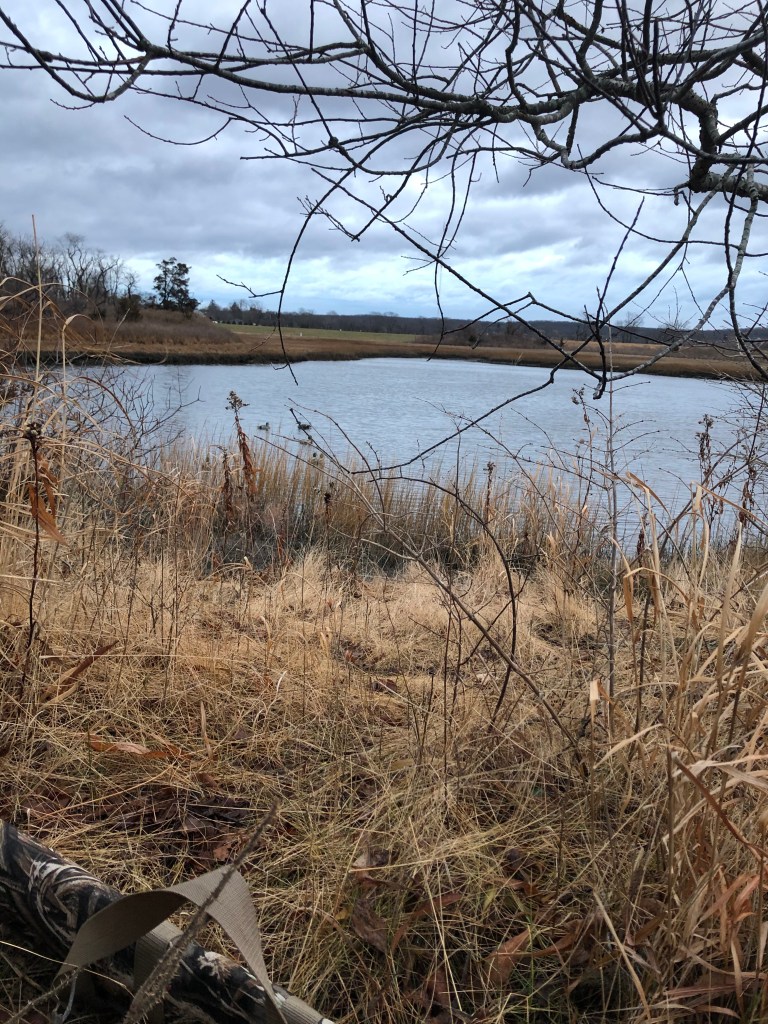
5.) Structure. At a first glance there appears to be no real structural aspect. When you slow down and truly look at the photo there is actually a lot of structure. All of the reeds and grass have there own individual structure. The way nature holds structures is not truly homogenous. This photo does take a little more examining than the other 4. But once you start to notice, it is hard to unsee.
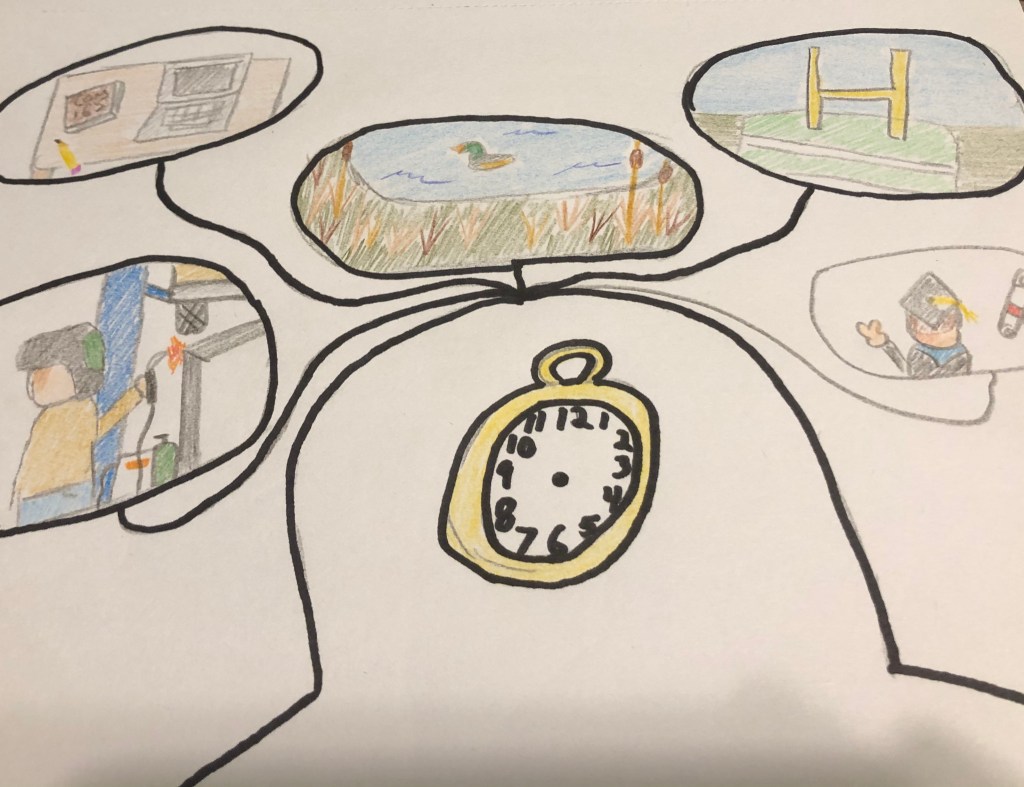
When debating what to do for my mind map, I had to weigh in a few different factors. My life is consistent of several different areas that i have to prioritize individually. So for that reason I have picked my 4 biggest categories to debate over. They are (clockwise) work, school, leisure, and sports. The 5th category is not as emphasized. This would be graduation. I left it sort of grayed out to show the fact that, although it may not be in my immediate line of sight, but still on the brain.
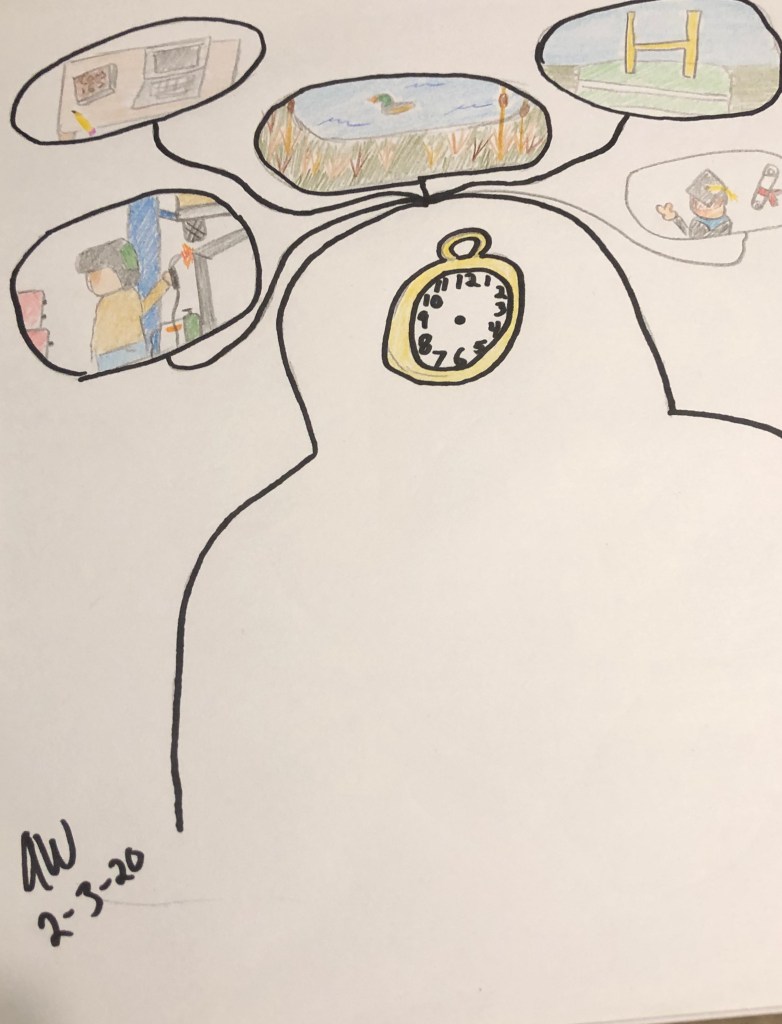
As far as the middle, I chose the rough silhouette of a person. With a pocket watch where the brain should be. There are also no hands on the watch. This is meant to represent how I have to think of where to spend my time. There are no words on the map lines for the same reasons that there are no hands on the pocket-watch. With so much going on, it can seem like a big blur trying to figure out what to do with such little time.
This is an example post, originally published as part of Blogging University. Enroll in one of our ten programs, and start your blog right.
You’re going to publish a post today. Don’t worry about how your blog looks. Don’t worry if you haven’t given it a name yet, or you’re feeling overwhelmed. Just click the “New Post” button, and tell us why you’re here.
Why do this?
The post can be short or long, a personal intro to your life or a bloggy mission statement, a manifesto for the future or a simple outline of your the types of things you hope to publish.
To help you get started, here are a few questions:
You’re not locked into any of this; one of the wonderful things about blogs is how they constantly evolve as we learn, grow, and interact with one another — but it’s good to know where and why you started, and articulating your goals may just give you a few other post ideas.
Can’t think how to get started? Just write the first thing that pops into your head. Anne Lamott, author of a book on writing we love, says that you need to give yourself permission to write a “crappy first draft”. Anne makes a great point — just start writing, and worry about editing it later.
When you’re ready to publish, give your post three to five tags that describe your blog’s focus — writing, photography, fiction, parenting, food, cars, movies, sports, whatever. These tags will help others who care about your topics find you in the Reader. Make sure one of the tags is “zerotohero,” so other new bloggers can find you, too.

 Aidan Well's Blog